
English
Views: 0 Author: Site Editor Publish Time: 2026-08-04 Origin: Site


When your application pushes beyond the limits of standard engineering plastics — extreme temperatures, high mechanical loads, or demanding chemical environments — PEEK and Torlon (PAI) are often the two materials that come up. Both are premium performance plastics, but they're not interchangeable. Choosing the wrong one can mean early part failure or unnecessary cost. Here's how they actually compare.

Property | PEEK | Torlon (PAI) |
|---|---|---|
Max Continuous Service Temp | ~250°C | ~260°C(短期可达更高) |
Tensile Strength | High | Very High(Torlon通常略高于PEEK) |
Wear Resistance | Good | Excellent |
Chemical Resistance | Excellent (broad range) | Excellent, but more sensitive to strong bases |
Machinability | Excellent, forgiving | Requires more controlled process (post-cure sensitive) |
Cost | High | Very High |
Typical Color | Beige / Natural | Amber / Dark Amber |
PEEK is a semi-crystalline thermoplastic — its combination of strength, chemical resistance, and ease of machining makes it the go-to choice for a huge range of precision applications. Torlon (Polyamide-imide, PAI) takes performance a step further in wear resistance and load-bearing capability, but it comes with a more demanding manufacturing process — parts typically require a post-machining thermal cure cycle to reach full mechanical properties, and getting that step right matters.
Application | Recommended Material | Why |
|---|---|---|
Precision bushings & bearings under high load | Torlon | Superior wear resistance and load capacity |
Semiconductor & wafer handling components | PEEK | High purity, excellent chemical resistance |
Valve seats & seals (moderate-high temp) | PEEK | Cost-effective, excellent all-round chemical resistance |
High-load structural components (aerospace-adjacent, non-flight-critical) | Torlon | Highest strength-to-weight among engineering plastics |
Components requiring frequent sterilization | PEEK | Withstands repeated autoclave cycles |
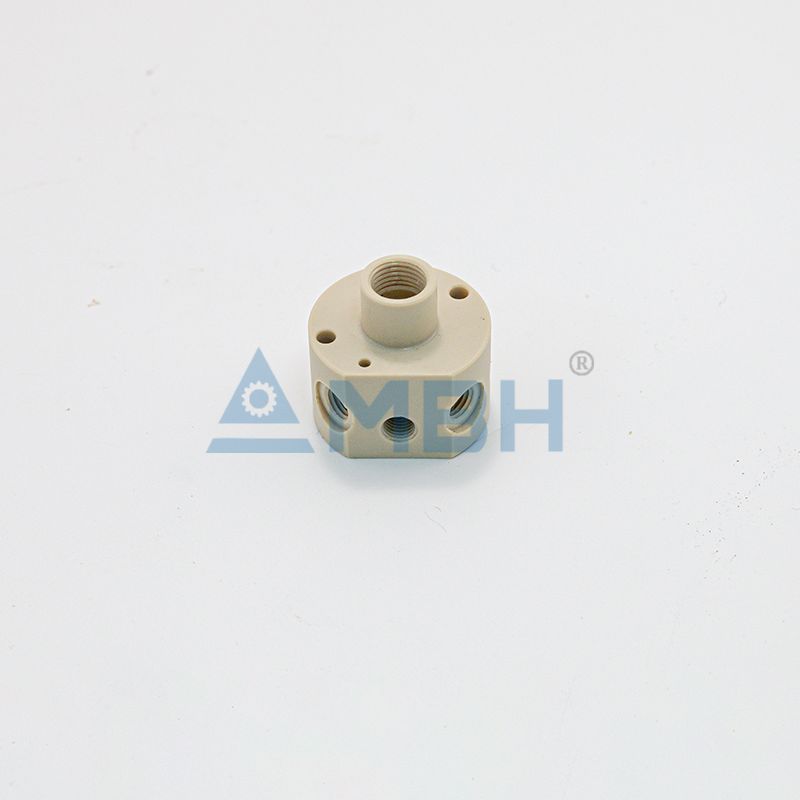 | 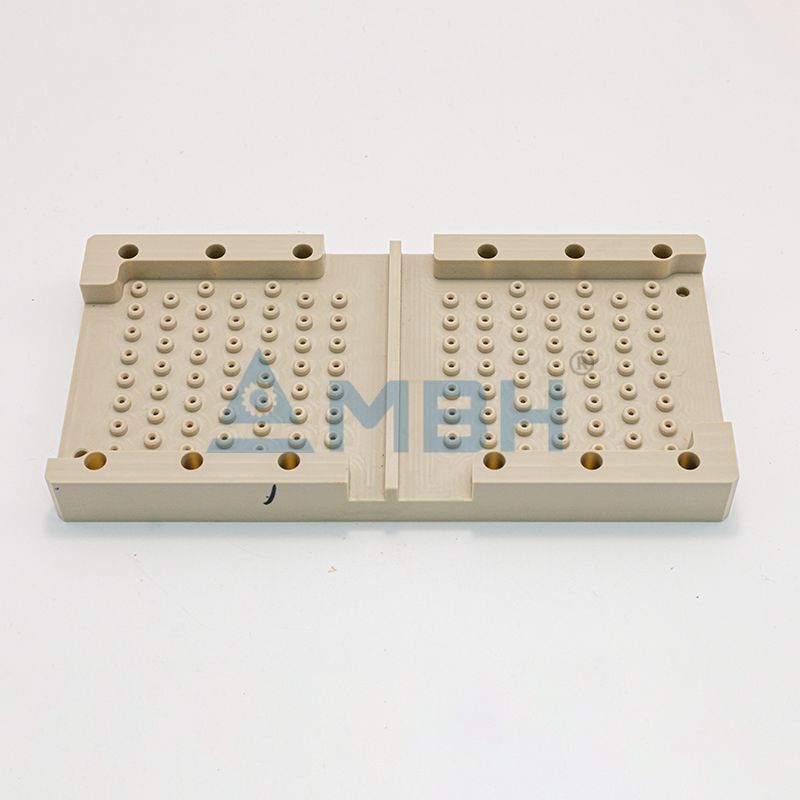 |
We started as a materials supplier — and over time, more and more customers began sending us their drawings directly, asking us to machine the parts as well. It's a natural progression: understanding how a material behaves at the raw stock level makes a real difference once you're cutting tight-tolerance features into it.
Today, we regularly machine PEEK and Torlon components to tolerances as tight as ±0.02mm, including custom, non-standard profiles beyond simple rods and sheets. Minimum order quantities are flexible and depend on the material and complexity — we're set up to support both prototyping and production runs.
If precision and material expertise both matter for your project, that combination is where we've built our track record.


