
English
Views: 0 Author: MBH Publish Time: 2026-07-01 Origin: MBH office


Quick answer: Delrin® (POM-H) is stronger and stiffer — better for gears, snap-fits, and high-load parts. Acetal copolymer (POM-C) resists chemicals and hot water better, costs less, and is the safer choice for hydraulic/pneumatic parts and large or thick components. Most general-purpose parts work fine with either.
When engineers and buyers start sourcing acetal plastic stock, one question comes up constantly: Is Delrin the same as Acetal? Are they interchangeable?
The short answer: they're related, but not the same. Here's what actually matters when you're choosing between the two.
Acetal is the common name for Polyoxymethylene (POM) — a family of engineering thermoplastics known for high stiffness, low friction, and excellent dimensional stability.
Delrin® is a brand name owned by DuPont (now Celanese) for their specific grade of Homopolymer Acetal (POM-H). Most standard acetal on the market is Copolymer Acetal (POM-C) — a different molecular structure with different performance characteristics.

POM-H (Delrin) is made from pure formaldehyde, resulting in a highly uniform, tightly packed polymer chain. This gives it higher tensile strength and rigidity.
POM-C is made by copolymerizing trioxane with a small amount of comonomer. This breaks up the chain uniformity slightly, which reduces peak mechanical strength — but dramatically improves thermal stability, chemical resistance, and processing consistency.
Neither is universally better. The right choice depends entirely on your application.
Property | POM-H (Delrin) | POM-C (Acetal) |
|---|---|---|
Tensile Strength | ~75–88 MPa | ~60–70 MPa |
Flexural Modulus | ~3.1–3.5 GPa | ~2.6–2.8 GPa |
Centerline Porosity | Present in thick stock | Virtually none |
Continuous Use Temp | Up to 85°C | Up to 100°C |
Hot Water / Steam Resistance | Poor | Excellent |
Strong Alkali Resistance | Limited | High |
This is the one most people don't talk about until it causes a problem.
When large-diameter POM-H rods or thick sheets are extruded, the outer layers cool faster than the core. Because homopolymer acetal has a higher crystalline shrinkage rate, microscopic voids form along the center axis as the core contracts.
For most structural applications, this is invisible and irrelevant. But if you're machining a manifold, a valve body, or any component that needs to hold pressure or seal fluid — centerline porosity can cause leaks, thread failures, and rejected parts.
POM-C has a uniform, non-porous cross-section throughout. For pneumatic and hydraulic components, it's the safer choice.

POM-H has higher internal stresses from its crystalline structure. After heavy machining — especially on thin-walled or asymmetrical parts — it can warp slightly as internal stresses redistribute.
POM-C holds its dimensions more predictably after machining. For tight-tolerance parts with complex geometries, this matters.
POM-H degrades in strong alkaline environments and prolonged hot water exposure. If your parts will be sterilized, cleaned with alkaline agents, or used in wet chemical environments — POM-C is the right call.
Use POM-H (Delrin) for:
- High-load gears and pinions
- Spring-loaded snap-fit components
- High-frequency rollers and bushings where surface hardness matters
Use POM-C for:
- Hydraulic and pneumatic manifolds
- Medical device parts requiring sterilization
- Semiconductor equipment exposed to alkaline cleaning fluids
- Large flat plates where warping must be avoided
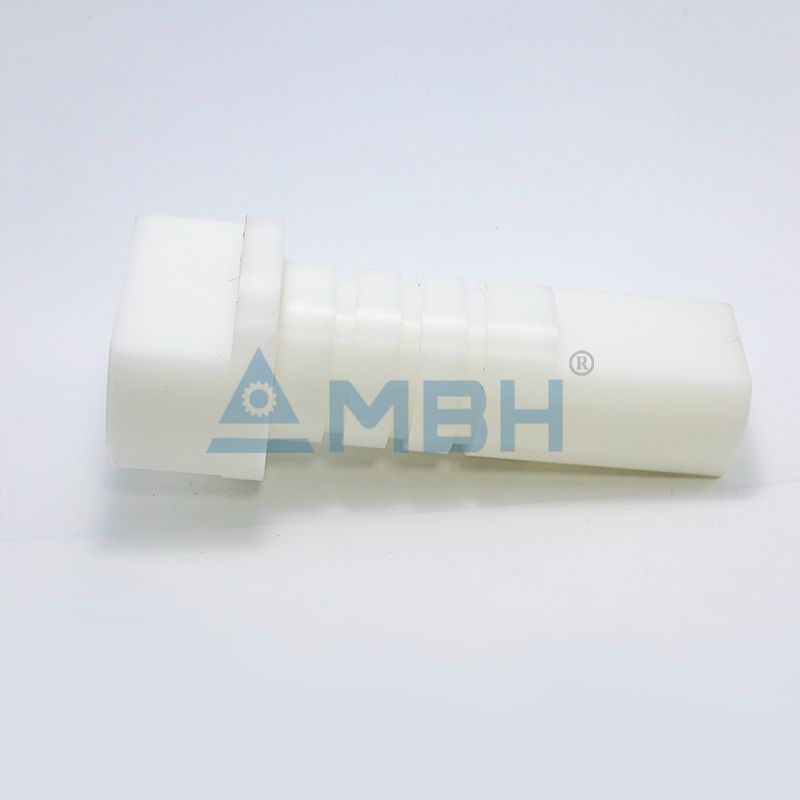 | 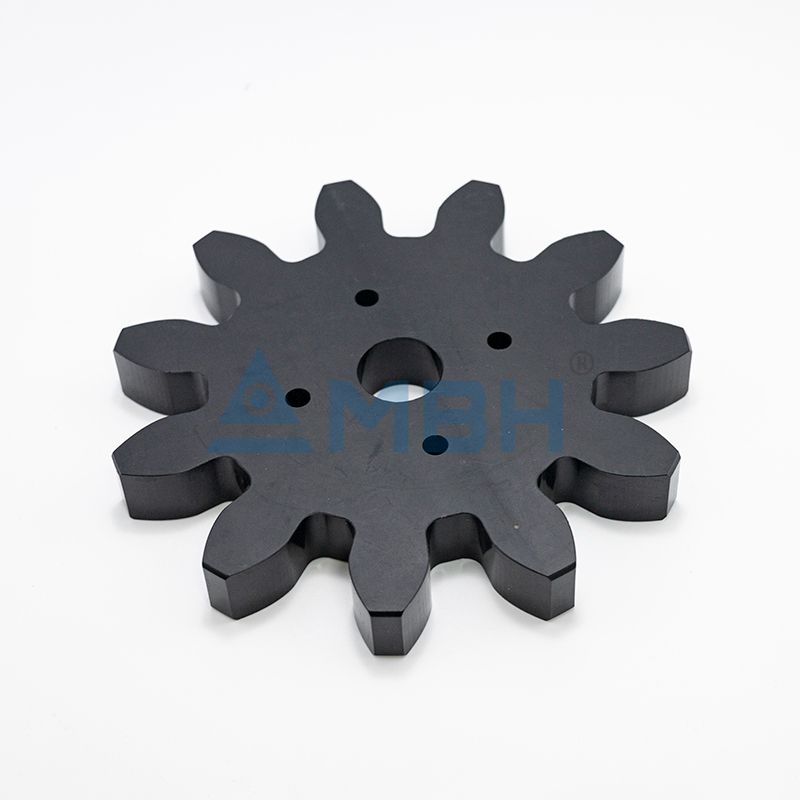 | 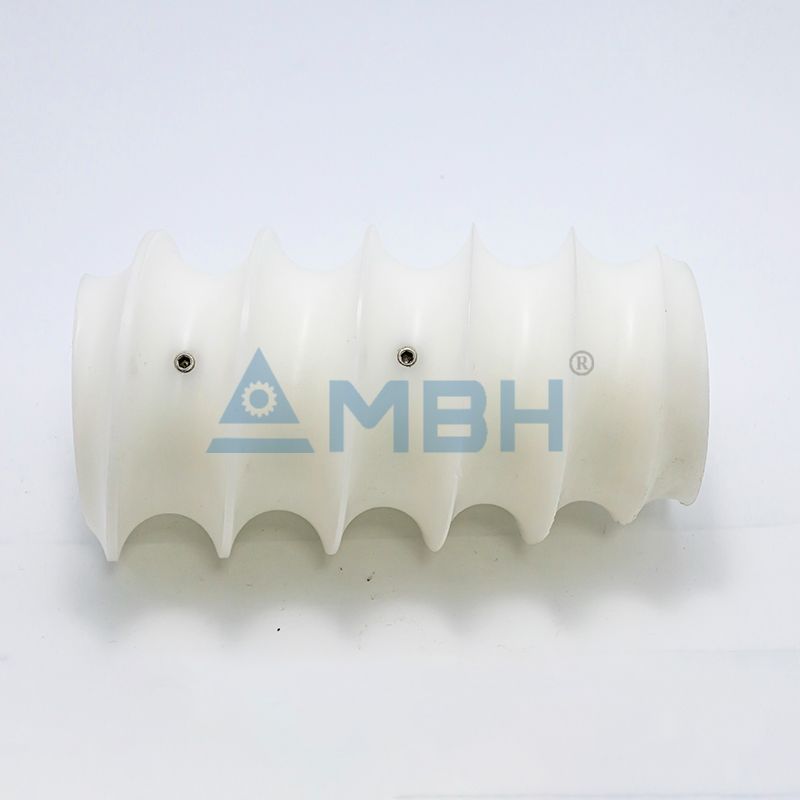 |
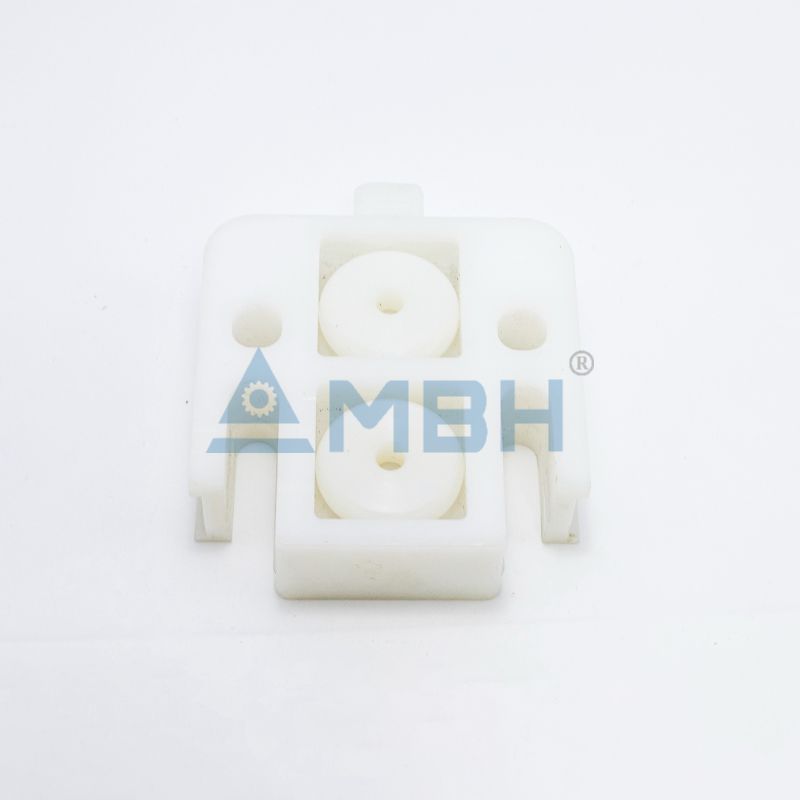 |  |
A Note on Cost
Delrin stock typically runs 15–30% higher than standard POM-C. Over-specifying to Delrin when POM-C would perform better — and cost less — is a common and avoidable procurement mistake.
If you're working on a custom component and need help deciding between POM-C and Delrin, feel free to reach out. Tell us about your application and we'll point you in the right direction.
Is Delrin the same as acetal?
Not exactly. Delrin® is DuPont's (now Celanese's) trademarked name for acetal homopolymer (POM-H). "Acetal" is the general term for POM, and in the market it usually refers to the copolymer version (POM-C). All Delrin is acetal, but not all acetal is Delrin.
Can I substitute acetal (POM-C) for Delrin (POM-H)?
Why is Delrin more expensive than acetal?
Does Delrin have porosity issues in large parts?


