
English
Views: 0 Author: Site Editor Publish Time: 2026-04-14 Origin: Site


A complete guide for engineers and buyers
When designing precision mechanical parts, choosing the right engineering plastic is critical. The wrong material can lead to poor performance, high costs, or even project failure. In this guide, we break down the most common materials, their properties, and ideal applications to help you make the best decision.
1. POM‑H (Acetal Homopolymer)

POM‑H is one of the most widely used materials for precision parts. It offers excellent rigidity, low friction, and good wear resistance.
Best for: gears, bearings, sliders, fasteners
Key advantages: high strength, stable dimensions, easy machining
Typical grades: 500P (high flow), 100P (high rigidity)
2. UHMW‑PE (UPE)

Ultra‑high‑molecular‑weight polyethylene is known for extreme wear resistance and impact toughness. Medical‑grade UPE is widely used in healthcare devices.
Best for: wear parts, medical components, low‑friction mechanisms
Key advantages: self‑lubricating, corrosion resistant, non‑toxic
3. PEI

High-strength and flame-retardant, PEI (Ultem) is ideal for structural and insulating parts requiring heat resistance and dimensional stability.
Best for: connector strips, sensor housings, sterilization trays, structural insulators
Key advantages: high heat resistance (170°C), inherent flame retardancy, excellent dimensional stability
4. PEEK (High‑Performance)
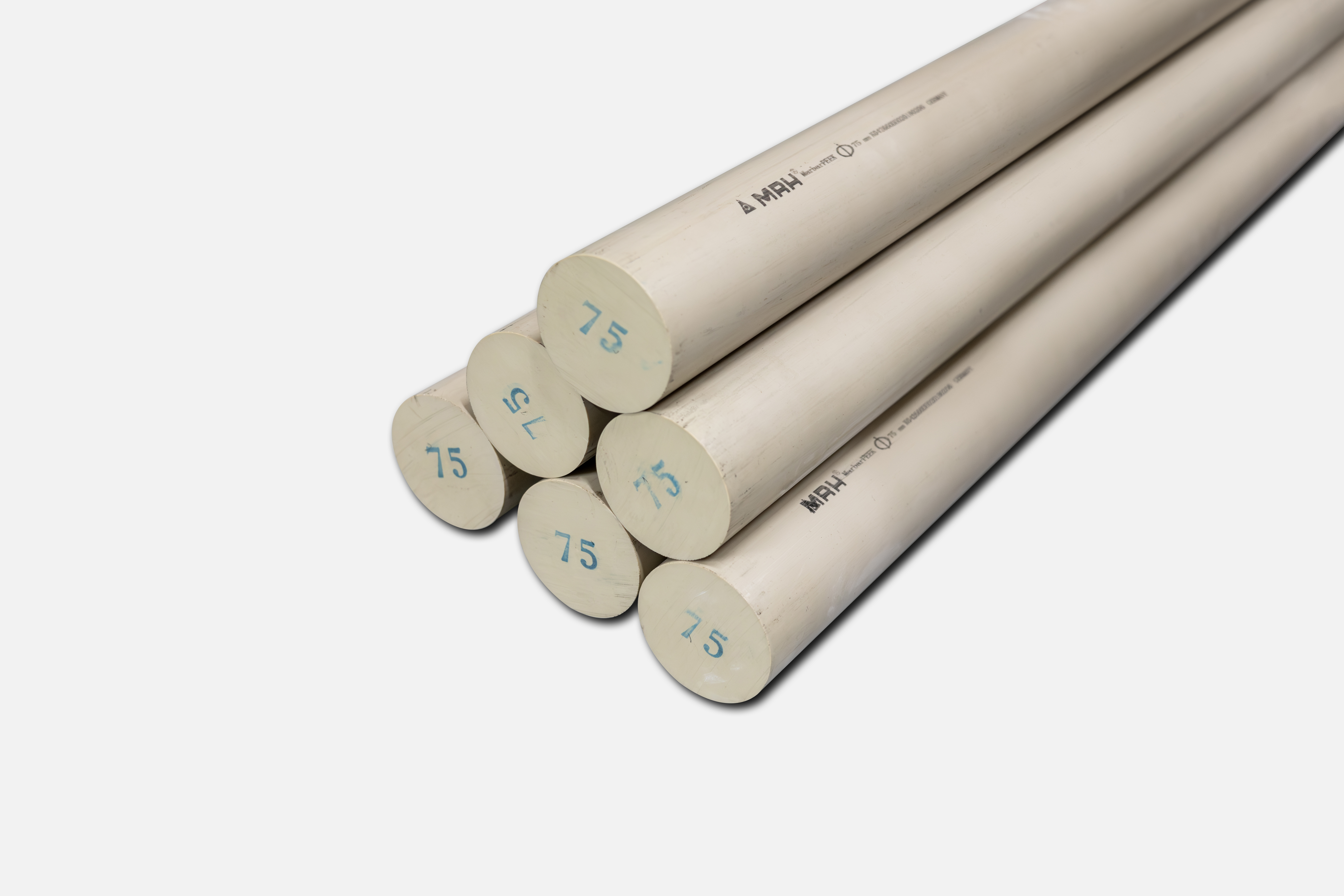
PEEK provides exceptional heat resistance, chemical stability, and mechanical strength for demanding industries.
Best for: semiconductor parts, aerospace components, high‑temperature environments
Final Tips for Material Selection
- Define working environment: temperature, load, friction, chemicals
- Confirm precision requirements: tolerance, surface finish
- Consider production volume and cost budget
- Work with a supplier that offers material modification and rapid prototyping
At MBH, we provide custom material modification, precision CNC machining, and fast prototyping services to support your project from design to mass production.

